Introduction: A Visual Bridge Between Past and Present
Huvy Elisha stands today as one of the most compelling voices in modern Jewish art. While her distinctive use of light and color has received much recognition, the deeper significance of her work lies in her commitment to preserving cultural memory. Elisha does not paint only to create beauty. She paints to remember. Her canvases carry forward the emotional and spiritual heritage of the Jewish people, transforming memory into a living visual experience.
At the heart of her artistic vision is the belief that a painting can serve as a bridge. Through her work she reconnects the modern viewer with the world of their ancestors. Forgotten customs, transformed landscapes and spiritual sites regain their presence in her art. In this sense, her work contributes meaningfully to the wider tradition of Jewish art and the expressive language of Judaica art.
This article explores how she preserves places, customs and traditional narratives through visual interpretation.
Documenting Places and Sites: Landscapes as Memory Keepers
A significant part of Elisha’s work is devoted to landscapes of both the Land of Israel and the Jewish Diaspora. These paintings are not technical records. They are emotional documents that capture atmosphere, history and sacred presence. Her Jerusalem is more than a city. It is a feeling shaped by the way she uses light to illuminate the Old City and its ancient stones.
Her depictions of Safed retain the mystical blue tones of its alleyways, while her portrayals of old synagogues in Europe preserve the memory of communities that no longer exist. Architecture, texture and mood all become part of a visual archive. Elisha shows not only what these places looked like, but what they meant.
Her approach places her in dialogue with the tradition of famous Jewish painters whose landscapes sought to preserve identity rather than geography. In this way, Elisha becomes a significant figure within contemporary Jewish art, carrying forward places that time has altered or erased.
Preserving Jewish Customs: Rituals Brought to Life
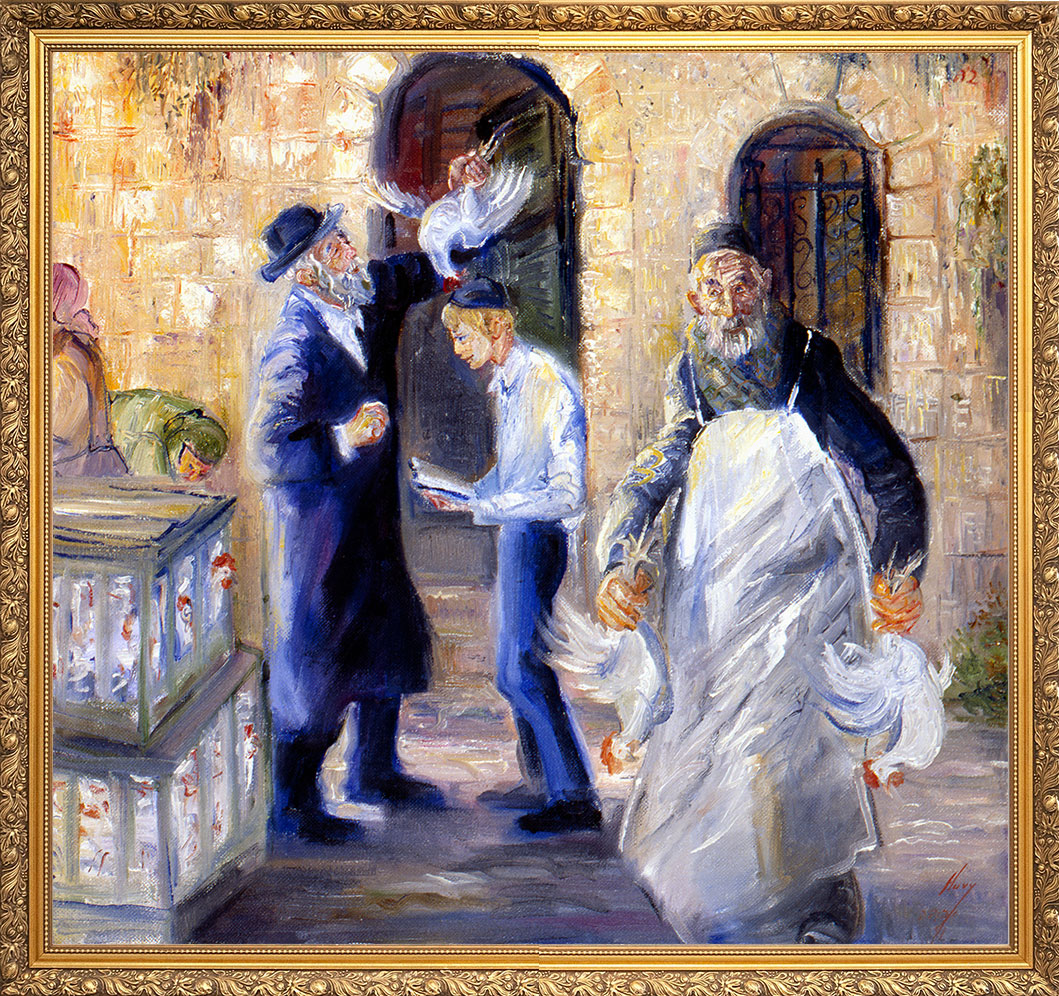
Elisha also devotes much of her work to the rituals and rhythms of Jewish life. Scenes of Shabbat candle lighting, the Passover Seder or a Bar Mitzvah are not mere illustrations. Through warm tones and soft, expressive lines she captures the holiness, intimacy and family connection at the core of these practices.
Her art ensures that these customs remain accessible to future generations. The viewer encounters not only the ritual itself, but also the emotional memory attached to it. This dimension positions her work as an important contribution to Jewish cultural memory, a central theme within many branches of Judaica art.
Interpreting Written Sources: Giving Voice to Text
Elisha’s work also engages deeply with Jewish literature. She brings to life biblical figures, midrashic stories and Talmudic passages through visual interpretation. Her goal is not to illustrate the text but to translate its inner meaning into a contemporary artistic experience. Ancient narratives become immediate and human, allowing the modern viewer to connect emotionally even without direct familiarity with the source.
In doing so, she continues a long artistic tradition found among Jewish painters who treated sacred stories as living material rather than distant mythology. Through this visual commentary, she preserves not only the events described in Jewish tradition, but the stories themselves and the values they carry.
Conclusion: The Enduring Legacy of Light and Memory
Huvy Elisha’s work stands as a living act of cultural preservation. Her paintings do more than portray scenes from Jewish life. They give form to memory and keep it present. Through her use of light, color and layered composition, she brings historical places, cherished customs and traditional narratives into the visual language of today.
In her art the past is not distant. It breathes. It invites the viewer to reconnect with the emotional depth of their heritage. Elisha succeeds in building the visual bridge described in this article, transforming collective memory into a contemporary artistic experience.
Her legacy rests in this ability to unite tradition with modern expression. To encounter her work is to enter a space where Jewish history, identity and spirit remain illuminated and alive.