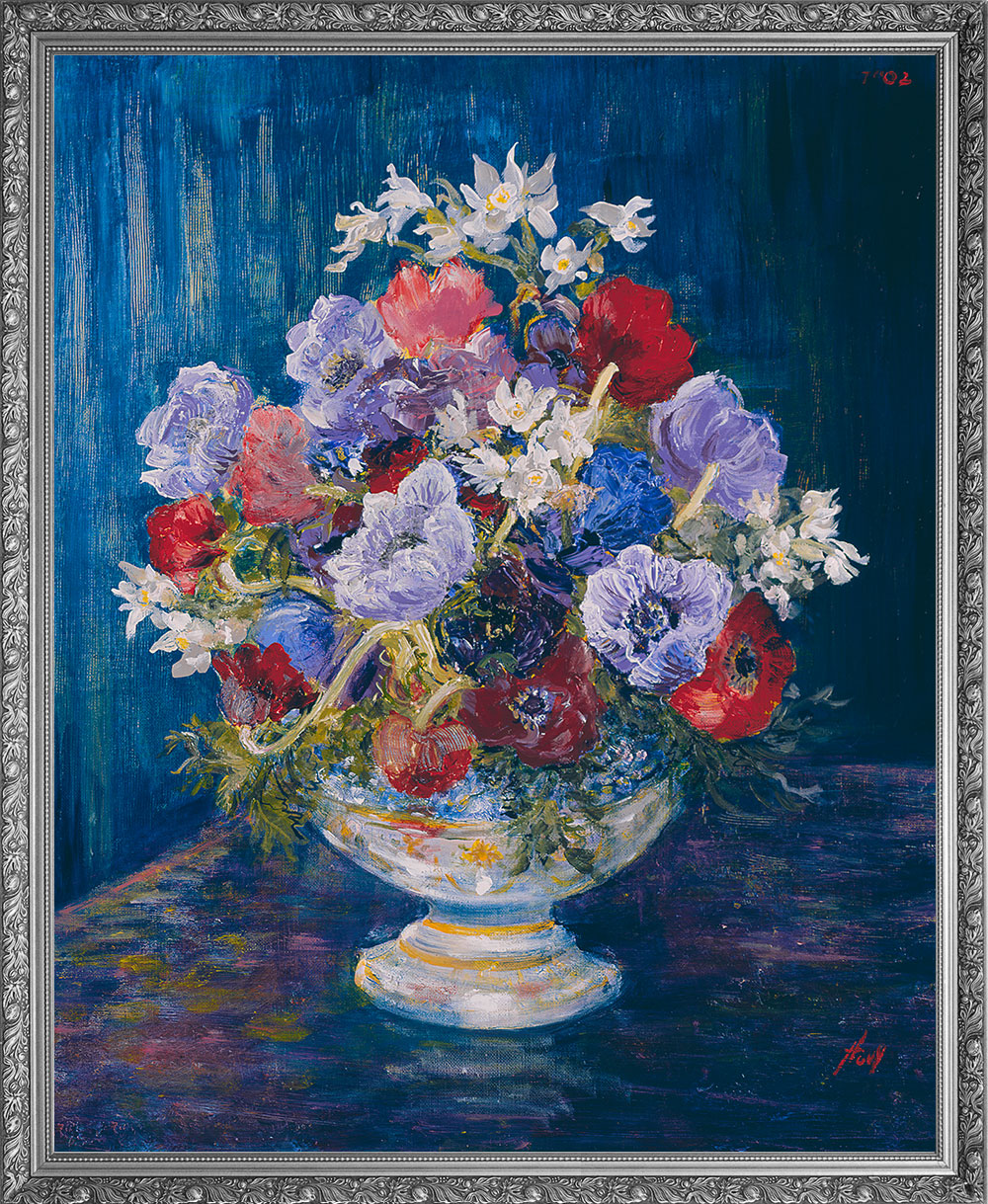
Huvy Elisha’s work includes more than Jerusalem streets and scenes of Jewish celebration. Her flower and garden subjects offer another way to explore her use of color, light, and painted texture—from intimate floral still-lifes to open compositions centered on greenery and nature.
These floral and garden works bring an uplifting, fresh perspective to Jewish wall art. By introducing organic colors and natural light into interior spaces, Huvy’s nature subjects offer an elegant alternative or complement to classic architectural views.
At Huvy’s Gallery, we take pride in introducing art lovers to these expressive nature compositions, which suit a wide variety of home interiors.
The Impressionistic Technique in Huvy’s Nature Works
Huvy Elisha studied at the prestigious St. Martin’s School of Art in London. In her flower and garden works, viewers can explore the expressive color, energetic brushwork, and treatment of light that also define her broader portfolio:
- Interplay of Light and Shadow: Her garden compositions suggest sunlight passing through foliage and highlighting botanical details.
- Layered Impasto Texture: Huvy applied paint with volume in her original works, giving floral elements a tactile, dimensional presence on the canvas.
- Expressive Color Palettes: Her nature themes utilize vibrant greens, warm terracottas, bright yellows, and soft floral pastels that refresh interior living spaces.
Why Choose Floral and Garden Art for Your Home?
Garden and floral paintings fulfill a distinct aesthetic and visual role in interior design:
- A Nature-Focused Subject: Flowers and gardens offer an alternative for viewers who prefer botanical subjects to architecture or figurative scenes.
- Color Connections: Look for colors in the artwork that complement—or deliberately contrast with—your furnishings.
- Flexible Styling: Floral, garden, and historical subjects can all work in different interiors. Compare the individual composition, scale, and framing rather than choosing by subject alone.
Explore the Flowers Collection
The gallery’s Flowers collection includes Purple Anemones, White Blossoms, and Golden Mimosa. Browse the individual images to compare their compositions and colors, then ask the gallery about dimensions, formats, and current availability. When choosing between them, consider the colors you enjoy, the available wall space, and how the artwork will relate to nearby furnishings.
Evaluating Huvy’s Subject Categories
To help you decide how a floral or garden piece might compare to traditional themes in your home, consider this overview:
| Subject Category | Visual Features to Look For | Possible Placement | What to Check |
| Jerusalem Landscapes | Historical stone architecture, gold light tones, classic arches | Main entryways, formal living rooms, dining spaces | Room light levels and frame style matching. |
| Festive & Synagogue Scenes | Figurative movement, vibrant blue and gold tones | Family rooms, communal areas, study spaces | Wall width and surrounding decor color harmony. |
| Floral Still-Lifes | Vases, structured bouquets, rich pastel and vibrant mixes | Dining rooms, side accent walls, bedrooms | Accent color coordination with room furnishings. |
| Garden Landscapes | Open foliage, paths, expressive green tones | Walls above sofas, open-plan spaces, hallways | Position away from direct sunlight; measure overall scale. |
Practical Scenario: Decorating a Sunlit Dining Area
Imagine choosing a garden-themed work for a dining area with white walls, wooden furniture, and a patio view. Compare available images for colors and compositions that suit the room, then check the dimensions before selecting a piece.
Position the artwork away from direct sunlight, even if the room itself is bright.
How to Pair Nature Paintings with Traditional Judaica Art
You do not have to choose exclusively between Jerusalem views and floral compositions; they work exceptionally well together when curated thoughtfully:
- Complementary Room Placement: Display a prominent Jerusalem landscape on your primary living room wall, and place a complementary floral work in an adjacent dining area or connecting hallway. This creates visual variety while maintaining artistic cohesion.
- Coordinated Framing: Utilizing simple, high-quality wood or classic frames across different subject categories helps integrate nature paintings smoothly alongside traditional Jewish themes throughout your home.
Frequently Asked Questions About Huvy’s Flower and Garden Art
Huvy’s floral paintings can be appreciated within the wider body of work of an Israeli Jewish artist. An individual flower painting does not need to depict an explicit religious scene to belong in a Jewish home. Viewers may find personal meaning in the flowers or garden imagery, but any symbolism attributed specifically to Huvy should be supported by a documented statement or reliable account.
Compare a few frame options with the artwork and your specific room. A clean, simple frame keeps the focus entirely on the composition and color, while a carved wood or warm metal frame can suit a classic setting. Ask the gallery or a professional framer for recommendations based on the painting’s colors and texture.
The gallery lists flower and garden subjects in its mixed-media collection. Ask the gallery about the format, dimensions, edition details, and current availability of the specific image you are considering. Original painting availability should be confirmed separately.
Explore the vibrant flower and garden collection at Huvy’s Gallery today. Contact us or visit our gallery to check available formats, canvas sizes, and framing options to find the ideal artwork for your home.