Bringing the Warmth and Sanctity of Tishrei into the Modern Home
The month of Tishrei isn’t just another period on the Jewish calendar; it’s an entire range of spiritual emotions. We move directly from the quiet awe of Rosh Hashanah and Yom Kippur to the unbridled, expressive joy of Sukkot. Capturing all that energy on canvas takes much more than technical skill. It requires an intimate connection to tradition combined with raw artistic vision.
Jerusalem-born artist Huvy (Ahuva) Elisha – who was accepted at a young age to London’s Saint Martin’s School of Art – built a legacy that bridges classic European Impressionism with deep spiritual resonance. Bringing an original oil painting or a hand-embellished piece from Huvy’s Gallery into your home can add warmth, texture, and a distinctive artistic presence to the space.
Featured Snippet: What defines Huvy’s artistic approach to High Holiday and Sukkot themes? Huvy captures movement, atmosphere, and emotion through bold Impressionist light, pronounced impasto texture, and expressive palette-knife work. Instead of static scenes, her paintings translate living Jewish worship – from silent prayer under a tallit to spontaneous dancing at the Western Wall – into dynamic visual light.
The Impressionist Light of Huvy: Bridging European Technique and Divine Devotion
In many contemporary interiors, traditional realistic paintings can sometimes feel visually heavy or static. Huvy’s work operates on a completely different frequency.
| Work / Theme | Dominant Color Palette | Spiritual Atmosphere & Visual Impact |
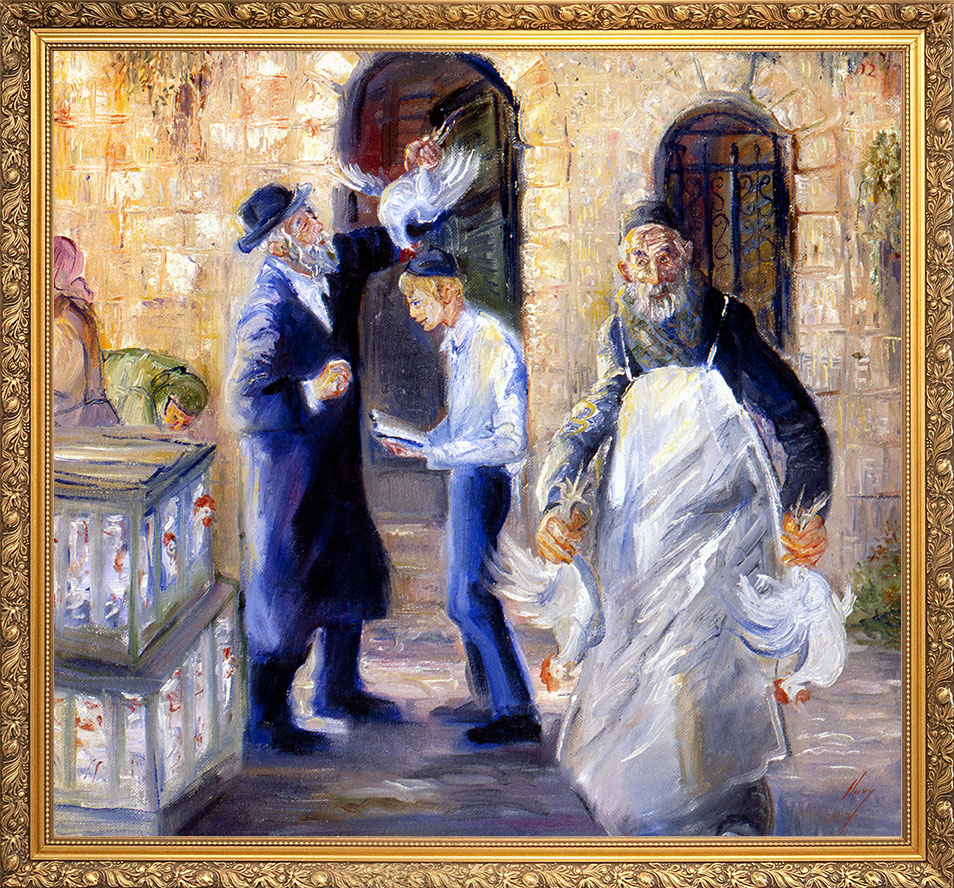
| The Kapparot Ceremony & Tashlich | Soft blues, pure whites, gold | Quiet reflection, purity, release |
| Rosh Hashanah & Shofar Sounding | Luminous white, deep blue, gold | Divine majesty, awe, elevation |
| Sukkot at the Western Wall | Warm stone, vibrant orange, green | Ecstatic joy, unity, physical movement |
Heavy Texture (Impasto) and Dynamic Palette Knife Work
Huvy simply didn’t paint flat surfaces. Using thick layers of oil paint – the impasto technique – she built sculptural relief directly on the canvas.
When sunlight or gallery lighting hits these raised ridges, the paint catches and reflects light differently throughout the day. A white prayer shawl or the ancient stones of the Kotel seem to shift and shimmer, mirroring the living energy of prayer.
The Chromatic Shift: From Days of Awe to the Exuberance of Sukkot
Across Huvy’s Tishrei-themed works, a noticeable shift in color and atmosphere can be seen:
- Elul, Rosh Hashanah, and Yom Kippur: Luminous whites, celestial blues, subtle golds, and deep royal violet. These shades evoke purity, heavenly sovereignty, and quiet reflection.
- Sukkot and Hoshana Rabbah: Warm ochres, fiery oranges, emerald greens, and rich reds. These warmer tones create a visual transition from the reflective atmosphere of the High Holidays toward the joyful character associated with Sukkot.
Design Insight: Flat, smooth surfaces can sometimes appear less dimensional in brightly lit modern rooms. Heavy impasto brushwork relies on dynamic room lighting to reveal its physical depth throughout the day.
Key Masterpiece Reviews: From Elul to Hoshana Rabbah
Repentance and Reflection: The Kapparot Ceremony & Tashlich
In her scenes preceding Yom Kippur, Huvy focuses on personal devotion. Figures draped in flowing tallitot stand near water or gather in prayer, rendered with soft, fluid strokes. The composition conveys a sense of spiritual cleanliness, making these pieces ideal for quiet study rooms or private sitting areas.
Coronation and Awe: Rosh Hashanah & The Enveloping Tallit
In Huvy’s Rosh Hashanah paintings, the tallit becomes a structure of pure light. Instead of painting fine, individual threads, Huvy used bold palette knife strokes of brilliant white and golden sunlight. The worshipper under the shawl is enveloped in divine grace, creating a centerpiece that inspires daily reflection.
Pure Joy at the Holiest Site: Sukkot at the Western Wall
Sukkot at the Western Wall stands out as a distinctive work in Huvy’s portfolio. Figures hold the Lulav and Etrog high amidst spontaneous dancing. The ancient Jerusalem stone wall is portrayed not simply as masonry, but as a glowing golden element that reflects the painting’s emphasis on light and spirituality.
A Common Misconception: Impressionism can emphasize movement, atmosphere, and emotion, while highly realistic styles often place greater emphasis on precise visual detail.
Pros and Cons: Original Fine Art vs. Hand-Embellished Prints
When selecting artwork from Huvy’s Gallery, collectors usually choose between original oil paintings and hand-embellished mixed media prints.
Original Oil Paintings
- Pros: One-of-a-kind artwork, original brushwork by Huvy herself, and the distinctive qualities of an original painting.
- Cons: Higher financial investment; requires precise placement and preservation planning.
Hand-Embellished Mixed Media Prints
- Pros: More accessible price point than an original oil painting; hand-retouched with real paint and brushwork by Huvy’s granddaughter, who was trained in techniques associated with Huvy’s artistic approach to add physical texture. Custom sizing is available.
- Cons: Produced in limited editions rather than being single, irreplaceable original canvases.
What Most Designers Miss: Curating High Holiday Art for Modern Interiors
During design consultations at Huvy’s Gallery, we frequently resolve the same layout mistakes:
- Don’t restrict holiday art to the holiday season: Paintings depicting the High Holidays carry timeless themes of renewal, joy, and faith. Hanging them in your dining room keeps that spiritual energy active year-round.
- Align art height with dining seating: Consider positioning dining room artwork slightly lower than standard eye level, depending on the room layout and typical viewing position, so the canvas feels intimate while seated.
- Use warm accent lighting: Consider warm, high-CRI lighting in the 2700K-3000K range to emphasize warm highlights and impasto texture. Cold LED lighting can flatten oil pigments.
What Most People Don’t Know: Artwork positioned at a typical standing eye level can sometimes feel less connected to the viewer when the main viewing position is seated at a dining table. Lowering it slightly creates an immediate, intimate connection during holiday meals.
Common Pitfalls to Avoid When Displaying Holiday Fine Art
- Over-framing with heavy ornate mouldings: Huvy’s compositions are rich and energetic. Bulky gold frames create visual clutter. A classical scene in a modern room may work particularly well with a simple floating frame or minimal linen liners instead.
- Direct sun exposure: Even though Huvy’s art is built on light, direct UV rays over extended periods can fade canvas pigments. Position artwork away from direct sunlight and use appropriate UV-filtering measures where possible.
- Proportion mismatch: Placing a small print on a very large wall can make the artwork feel visually undersized. Ensure main focal walls feature large canvases or coordinated sets.
The Most Common Mistake: Choosing frame styles that match the historical era of the subject matter rather than the style of the room. A classical scene in a modern room almost always looks cleaner with a simple floating frame.
Who This Style May Not Be For
Huvy’s impressionist approach focuses on emotion, energy, and light rather than crisp architectural accuracy or fine line details. If your aesthetic preference leans toward sharp, photographic realism where every stone edge or garment thread is explicitly drawn, classic realistic Judaica may be a better fit. Huvy’s art speaks directly to those who value mood, atmosphere, and spiritual warmth over strict literal representation.
Frequently Asked Questions About Huvy’s High Holiday and Sukkot Artwork
Huvy’s mixed-media prints are individually enhanced by her granddaughter, who was trained in techniques associated with Huvy’s artistic approach. The process adds real layers of paint and physical impasto texture, giving the works additional depth and presence while offering a more accessible alternative to an original oil painting.
Sukkot at the Western Wall and Hasidic Dance at the Western Wall are particularly well suited to a festive dining room. The warm tones of Jerusalem stone, colorful holiday clothing, and expressive movement of the dancers can bring a sense of celebration, warmth, and spiritual connection to the space throughout the year.
Yes. Huvy’s Gallery offers custom sizing for its mixed-media editions. This option can help integrate the artwork into architectural niches, feature walls, private homes, synagogues, and boutique hotels.
Consider warm spot lighting in the 2700K-3000K range with a high color-rendering index (CRI). Properly positioned lighting can emphasize the depth of the brush and palette-knife strokes, highlight the impasto texture, and bring out warm and golden tones in the artwork.