If you’ve ever browsed a gallery in Jerusalem or explored Jewish art online, you’ve probably come across the terms Biblical Art and Modern Judaica. They are often used interchangeably, yet they describe two very different artistic traditions. Understanding the distinction can help you choose artwork that reflects both your personal taste and your collecting goals.
While both styles bring immense beauty, history, and cultural depth to a home, they behave differently in the art world. Original paintings by established artists working in biblical themes have historically attracted consistent interest among collectors, although demand ultimately depends on factors such as the artist’s reputation, provenance, rarity, and condition. Modern Judaica, while highly cherished for its design and ceremonial connection, follows a different path of appreciation.
Decoding the Terms: What Are We Actually Talking About?
To build a meaningful collection, it helps to understand the conceptual boundaries of these two categories.
Biblical Art: Painting the Eternal Narrative
Biblical Art is defined primarily by its subject matter: the characters, stories, and landscapes of the Hebrew Bible (Tanakh). It is almost always figurative and narrative. Instead of showcasing ritual items, it brings pivotal historical and spiritual moments to life—like Abraham’s journey, the Exodus, or the timeless light of ancient Jerusalem.
Historically influenced by classical European traditions but revolutionized by 20th-century Israeli artists, this category translates profound theological weight into high-end visual masterpieces.
Modern Judaica: Ritual, Symbols, and Design
Traditionally, Judaica refers to ceremonial objects used in Jewish rituals—such as silver menorahs, kiddush cups, or mezuzah cases. Modern Judaica expands on this tradition, merging ritual items with contemporary, minimalist, and mid-century designs.
When applied to paintings or wall art, Modern Judaica often features abstract interpretations of holy sites (like a minimalist Western Wall), Hebrew calligraphy, or Kabbalistic symbols, rather than a literal, storytelling scene.
How the Art Market Views Both Categories
In the art world, these two categories typically appeal to different sensibilities and are valued based on different criteria:
- Biblical Art aligns closely with the traditions of Fine Art. Its value is often tied to the artist’s reputation, the uniqueness of the medium (original oil on canvas vs. prints), exhibition history, and academic significance. Because biblical themes resonate across different faiths, these works often find a diverse, global audience of collectors.
- Modern Judaica often bridges the gap between fine art and beautiful design. While original paintings exist, a significant portion of this market consists of mixed-media plaques, fine silverwork, and stylized prints. The demand here is frequently driven by interior design trends, Jewish holiday gifting, and immediate aesthetic appeal.
Understanding Mediums: Originals vs. Prints
When exploring Jewish art, you will often come across high-quality digital reproductions, commonly known as giclées or hand-embellished prints. These pieces look stunning, often featuring actual physical brushstrokes added on top of the print by the artist or studio, and they offer a wonderful way to enjoy art at a more accessible price point.
However, for collectors focused on long-term artistic value, it is important to note that embellished prints do not typically hold the same value on the art market as original paintings. If your primary goal is building a collection that retains its significance and value over time, focusing on original oil or acrylic paintings on canvas is generally the most reliable path.
Biblical Art vs. Modern Judaica: A Quick Comparison
| Feature | Biblical Art | Modern Judaica |
| Primary Focus | Narrative biblical scenes, historical figures, Jerusalem landscapes | Abstract symbols, Hebrew calligraphy, ritual-based design |
| Mediums | Original oil on canvas, pastel, watercolor, bronze sculptures | Mixed media, metals, acrylics, graphic prints |
| Target Audience | Global art collectors, museums, interfaith institutions | Jewish diaspora, modern home designers, ritual art buyers |
| Valuation Drivers | Artist provenance, exhibition history, artistic legacy | Decorative appeal, utility (for ceremonial objects), design trends |
| Collector Profile | Long-term heritage preservation and aesthetic appreciation | Immediate aesthetic value, home decor, and ceremonial use |
| Examples | Jerusalem landscapes, Patriarchs, Jewish festivals | Hebrew calligraphy, Menorah motifs, Mezuzah-inspired art |
Why Huvy’s Work Bridges Both Worlds
The most successful collections often feature artists who successfully bridge the gap—creators who apply classical, high-end fine art techniques to traditional Jewish and biblical themes. A prime example of this hybrid success is the late Israeli post-impressionist Huvy (Ahuva) Elisha (1927–2022).
From London to Mea She’arim
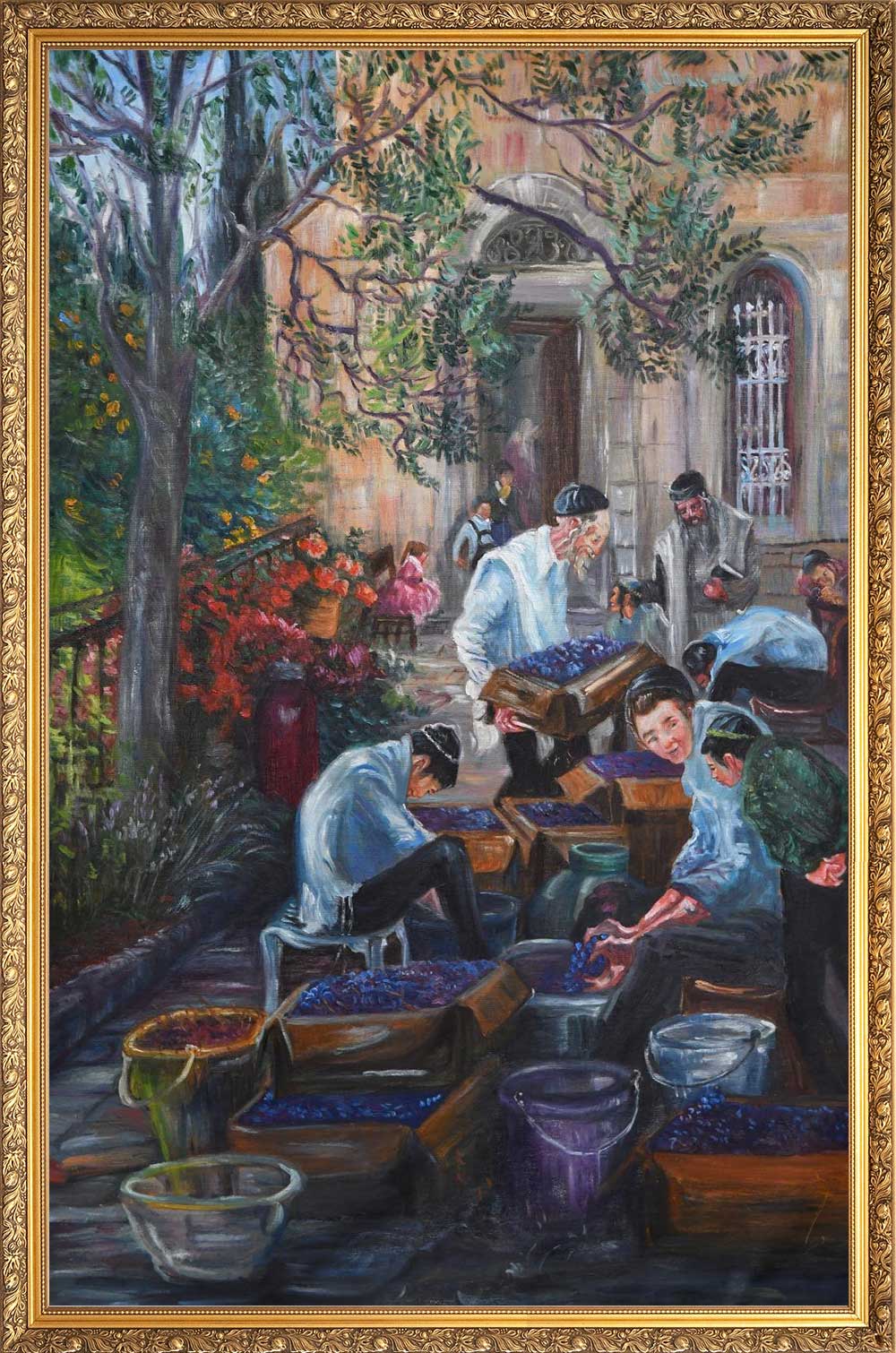
Classically trained at Saint Martin’s School of Art in London, Huvy brought a sophisticated European post-impressionist style back to Israel. Living and painting in the heart of Jerusalem—specifically drawing inspiration from the ultra-Orthodox neighborhood of Mea She’arim—she lived amongst the very traditions she depicted. This gave her work an unparalleled level of authenticity and cultural depth.
Painting the Joy of Jewish Weddings
While Huvy painted stunning Jerusalem vistas and biblical figures, she became world-renowned for her vibrant Jewish wedding scenes. She chose weddings because they represent the ultimate expression of Jewish continuity, hope, and community. She didn’t just paint a ceremony; she captured the spiritual energy of the event.
The Magic of Impasto and Light
Huvy’s signature technique was her heavy use of impasto—applying paint in thick, deliberate layers using a palette knife. This wasn’t just a stylistic choice; it was how she captured the unique, golden light of Jerusalem. When light hits her textured canvases, it dances across the physical ridges of the paint, giving the viewers the feeling that they are standing in the holy city itself.
Following her passing in 2022, the number of her original paintings available on the market naturally became limited. For collectors, this means each original piece represents a finite, cherished part of her artistic legacy, which naturally sustains interest among serious art lovers.
Is This Style of Collecting Right For You?
Collecting fine Jewish art is a deeply personal, long-term journey. If you are looking for rapid, speculative turnarounds, this market may not align with your goals.
Instead, this is a relationship-driven, heritage-oriented field. It is perfectly suited for collectors who want to preserve their family’s heritage in tangible, culturally significant assets—pieces they can proudly display in their homes for decades before passing them down to the next generation.
3 Practical Tips for Selecting Fine Art
Before choosing a piece of Jewish art for your home, consider these guidelines:
- Look for physical depth (Impasto): In post-impressionist Biblical Art, the paint shouldn’t be flat. Examine the texture. Master artists like Huvy use thick layers of paint to catch and play with light, giving the canvas a living, breathing quality.
- Verify public auction data: It is always wise to do your own research. Check established public databases like MutualArt or Invaluable to see if the artist has a stable, multi-year history of public gallery or auction sales.
- Ensure universal appeal: Does the painting hold emotional power on its own? The most valued pieces (like Huvy’s Chassidic Dance series) possess a vibrant energy and universal beauty that captivates viewers, regardless of their personal background.
FAQs about Biblical Art and Modern Judaica
Is Jewish art a reliable long-term acquisition?
Yes, particularly as a meaningful way to enrich a collection. The global Jewish community has a deep-rooted commitment to preserving its cultural heritage. High-end pieces by recognized masters (such as Rubin, Gutman, or Huvy Elisha) have historically shown remarkable resilience, maintaining their value and appeal even during changing economic climates.
What is the difference between a standard print and an embellished print?
A standard print is a high-quality digital copy of an artwork. An embellished print (often produced in limited editions) is a print that has physical brushstrokes of paint added over the top, giving it texture. While they are highly decorative and more textured than standard prints, they generally do not carry the same lasting artistic value as an original oil painting.
Why is Jerusalem such a dominant theme in both categories?
Jerusalem is the ultimate spiritual and cultural anchor. In Biblical Art, it serves as the physical and historical stage for biblical narratives. In Modern Judaica, its iconic golden stone, archways, and gates act as a universal, symbolic expression of Jewish identity and connection.
How do I ensure the authenticity of a piece?
Always purchase art that comes with documented provenance (chain of ownership) and an official Certificate of Authenticity. For artists whose estates are actively managed, such as Huvy Elisha, ensure that the documentation is issued directly by the estate’s official representing gallery