Jerusalem is more than a destination; it is a profound spiritual heartbeat that has resonated through the centuries. For those who feel an unyielding connection to its ancient stones and golden vistas, the concept of the Aliyah – the ascent to the heights of Jerusalem – is not merely a historical memory, but a continuous inner journey. Jerusalem art serves as the ultimate expression of this longing, capturing the intangible sanctity of the city and bringing its unique atmosphere into the home. Whether through a one-of-a-kind original masterpiece or a high-quality fine art reproduction, bringing this light into one’s private space is the most evocative way to bridge the distance between the heart and the Holy City.
The Essence of the Pilgrimage: Why We Seek Jerusalem in Fine Art
The desire to “ascend” to Jerusalem is a theme that has dominated the world of fine art for generations. It is a movement of the soul toward a higher purpose. In professional art curation, we often see that collectors aren’t just looking for a landscape; they are looking for a vessel for their own spiritual aspirations.
The Concept of “Aliyah”: More Than a Physical Journey
In Hebrew, the word for immigrating to or visiting Jerusalem is Aliyah, which literally translates to “ascent.” This isn’t just about the elevation of the Judean Hills; it’s about a spiritual elevation. When a piece of art captures this essence, it ceases to be a static image and becomes a living experience. From my experience working with international collectors, the pieces that resonate most are those that don’t just show the city, but invite the viewer to walk within it.
Capturing Movement: How Art Mirrors the Ascent
When observing high-end Jerusalem art, one can often feel the rhythm of the journey. Masterful artists use linear perspective and light gradients to draw the viewer’s eye upward, mirroring the physical and spiritual climb toward the Old City walls. This sense of movement allows the observer to feel as though they are part of a timeless procession of the faithful, walking the same paths that have been tread for thousands of years.
Techniques That Breathe Life Into the Stone: From Realism to Impressionism
Jerusalem-themed art has evolved significantly, offering collectors various ways to connect with the city’s energy. However, not all techniques are created equal when it comes to capturing “sanctity.”
The Symbolism of the Walls: Layers of History and Prayer
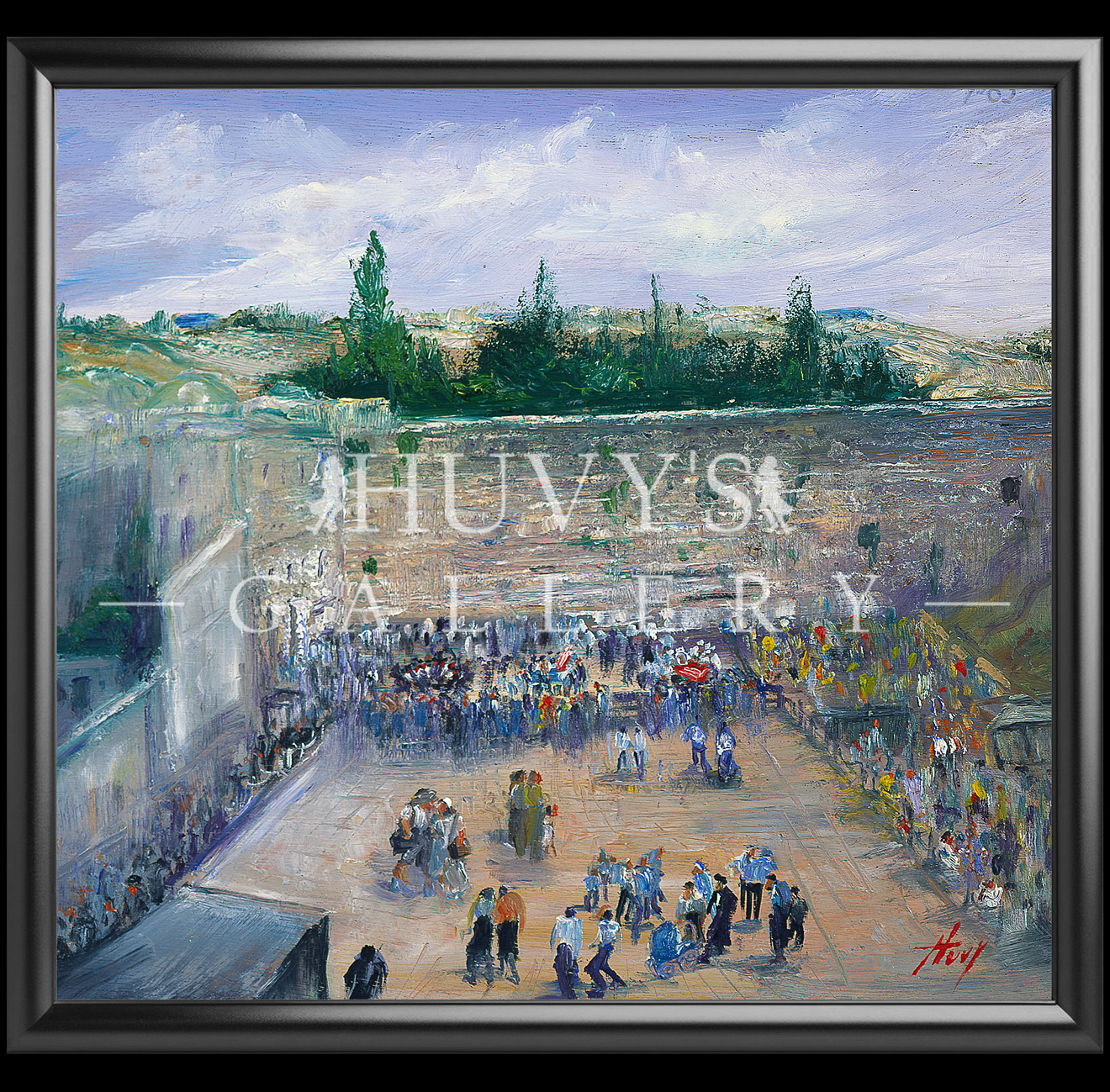
The walls of Jerusalem are symbols of endurance, history, and divine protection. In original oil paintings, these walls are often rendered with thick, textured layers known as Impasto. This technique – where paint is laid on an area of the surface in very thick layers – represents the many layers of time, history, and prayer that have settled upon the limestone. When you touch (or even just view) a textured painting of the Kotel, you are feeling the weight of history itself.
The “Jerusalem Gold”: Mastering the Unique Light of the Judean Hills
Perhaps the most challenging aspect of creating Jerusalem art is capturing its legendary light. Critics and artists alike have long noted that the sun in the Judean hills creates a golden hue, often referred to as “Jerusalem of Gold,” which is unique to this region.
Information Gain Note: Many people assume the “Gold” of Jerusalem refers only to the Dome of the Rock or the limestone. In reality, it is a meteorological phenomenon where the dust in the mountain air scatters the evening light, creating a literal golden glow.
Impressionist techniques are particularly effective here. By prioritizing the feeling of the light over rigid, photographic lines, the artist creates an ethereal, almost heavenly atmosphere on the canvas.
The Artistic Language of Huvy: A 7th-Generation Perspective
Among the creators inspired by these heights, the works of the artist Huvy stand out for their rare ability to blend classical European sophistication with raw, spiritual passion. As a seventh-generation Jerusalemite, her connection to the city isn’t academic – it’s ancestral.
Bridging Worlds: From Bezalel and Paris back to the Old City
Huvy’s journey took her from the Bezalel Academy in Jerusalem to the prestigious art circles of Paris. This unique background allows her to apply the refined strokes of French Impressionism to the rugged, holy landscapes of Israel. This fusion is what gives her work its “Topical Authority” in the art world; it is technically brilliant yet spiritually grounded.
Impasto and Ethereal Lighting: The Signature Huvy Style
Huvy utilizes advanced techniques to depict the daily life and the timeless holiness of her home. Her brushwork is characterized by a high-tempo energy:
- Ethereal Lighting: She focuses on the “Golden Hour,” where the distinction between the physical and spiritual worlds seems to thin.
- The Living Pilgrimage: Her paintings frequently feature the movement of figures – often blurred or softened – suggesting that the individuals are part of a larger, eternal spiritual whole.
Bringing the Light Home: Original Masterpieces vs. Fine Art Reproductions
For an art lover, the goal is to find a piece that resonates with their specific spiritual journey. At Huvy’s Gallery, we guide collectors through two primary paths:
Why an Original Oil Painting is a Spiritual Investment
An original oil painting is a finite, unique asset. Beyond its potential for financial appreciation, an original carries the direct “Kavanah” (spiritual intention) of the artist. The physical ridges of the paint and the specific choices made in the heat of creation cannot be perfectly replicated. It is a one-of-a-kind connection to Jerusalem.
Curating Your Space: Choosing Art That Resonates
When selecting art for your home, consider the “Energy of the Room”:
- For Study/Prayer Rooms: Darker tones with focused light on the Western Wall or holy scrolls.
- For Living Areas: Bright, “Jerusalem Gold” landscapes that open up the space and invite conversation.
| Feature | Original Oil Painting | Fine Art Reproduction (Giclée) |
| Uniqueness | One-of-a-kind | Limited or open editions |
| Texture | Physical Impasto (raised paint) | Visual texture (smooth surface) |
| Value | High investment potential | Accessible elegance |
| Connection | Direct artist’s touch | Thematic inspiration |
Common Questions for Art Collectors
Original oil paintings by established artists like Huvy are finite assets. As the artist’s legacy grows, the value of the work often appreciates. Furthermore, the “spiritual return on investment” – the daily inspiration the piece provides – is immeasurable.
Traditional realism focuses on the “what” – the exact architectural details. Impressionism focuses on the “how” – how the city feels, how the light moves, and the emotional impression it leaves on the soul. Most collectors find that Impressionism better captures the holiness of the city.
Yes. Huvy’s Gallery specializes in shipping original works and reproductions to collectors worldwide. Each piece is crated to museum standards, ensuring that the “Spirit of Jerusalem” arrives safely at your doorstep, regardless of distance.
Your Personal Window to Jerusalem
The longing for Jerusalem is a fire that never truly goes out. By choosing a piece of art that captures the essence of the Pilgrimage, you are doing more than decorating a wall; you are claiming a stake in the eternal story of the Holy City. Whether it is the textured walls of the Old City or the golden light of an impressionist sunset, let your home reflect the “Aliyah” of your soul.